December 11 saw the first game for the first Tengen Title. As would prove to be his habit, Fujisawa Shūkō 9d qualified for the title match against Ōhira Shūzō 9d. Shūkō broke out to an early lead taking the first game, and the second on December 18. However, Ōhira spoiled Shūkō's Christmas with a win on the 25th, extending the best of five series.
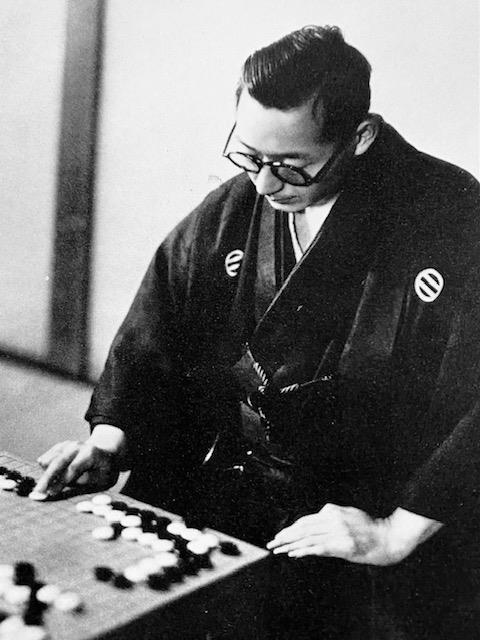
Picture: Kitani Minoru
The balance of this column is devoted to a celebration of the life of Kitani Minoru, "The Great Kitani," who passed away on December 19, 1975. At the outset, I express my gratitude to John Power, for his biographical sketch over two issues of Go Review, and to John Fairbairn's background info in his book Kamakura. This column borrows freely from both.
Born in Kōbe in 1909, Kitani was the son of a barber. This might not seem the most auspicious of starts, but when dad played go with his customers, the son knew the game well before he started school. His early teaching was from Fukuju Suiseki, followed by Torii Nabejirō 3d. He proved so talented that he was then introduced to Kubomatsu Katsukiyo 4d - "The Great Amateur."
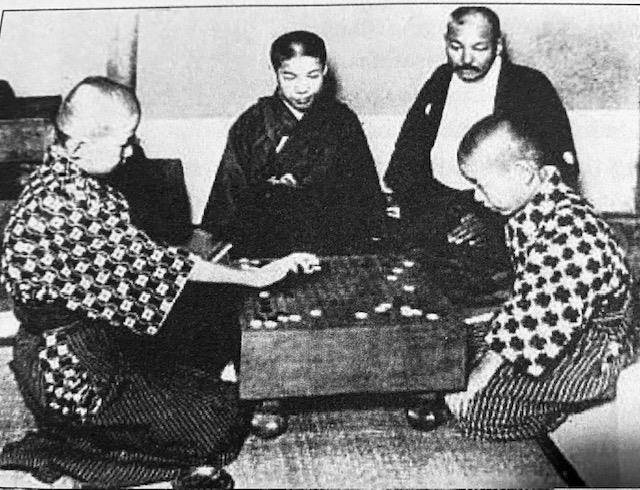
Picture: Kitani, right, playing Hashimoto Utarō in front of the Great Amateur
Kubomatsu's nickname referred to his love of the game, not his playing strength and he was a top player. Kitani lost his entrance game at nine stones. Despite this rough start, Kitani was a serious student and improved rapidly. In 1921, Kubomatsu sent him to study in Tokyo with Suzuki Tamejirō 6d.
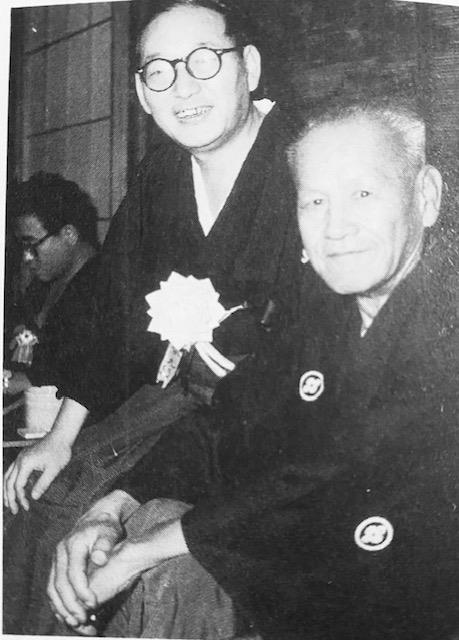
Picture: A later photo of Kitani with his teacher, Suzuki Tamejirō
Kitani continued to improve, although he did find some distraction hanging out in a sumo gym. Although he did not take up the sport, he did seem to adopt a sumo wrestler's appetite, eating 18 bowls of rice a day. Indeed, when his teacher's home was destroyed in the Great Earthquake in 1923, Suzuki suggested that first rumblings were simply "Kitani running away with the rice tub!" Suzuki was the author of the first great go encyclopedia, the Igo Daijiten.
He became shodan in 1924, then made a double promotion in 1926.
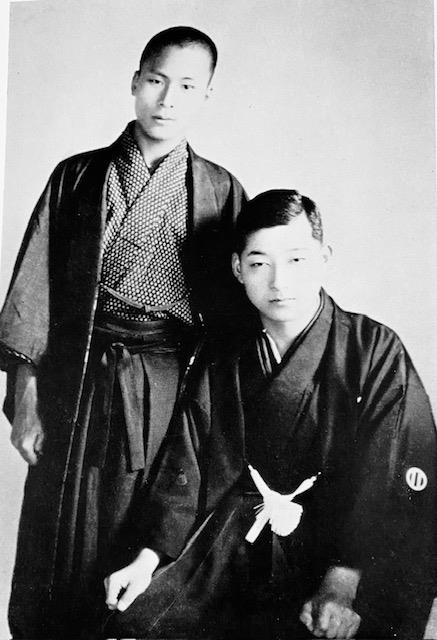
Picture: Kitani, seated, with Sekiyama Riichi
Around this time he acquired his first nickname, "Kaidomaru" ("Prodigy" or "Wonder Kid"). Most notable was his success in the Rising Stars Win and Continue Tournament, which began in 1926. Prizes in this tournament were given when players managed five wins in a row, Kitani managed ten and was soon promoted to 4d. He cemented his fame in the tournament which took place between the Nihon Ki'in and the Kiseisha, a breakaway rival. Once again, he won ten games in a row.
In 1929 he met Go Seigen, and they became friends and rivals. Together, they created the "Shin Fuseki" and played in the great Kamakura Jūbango, producing some of the best go games of the time.
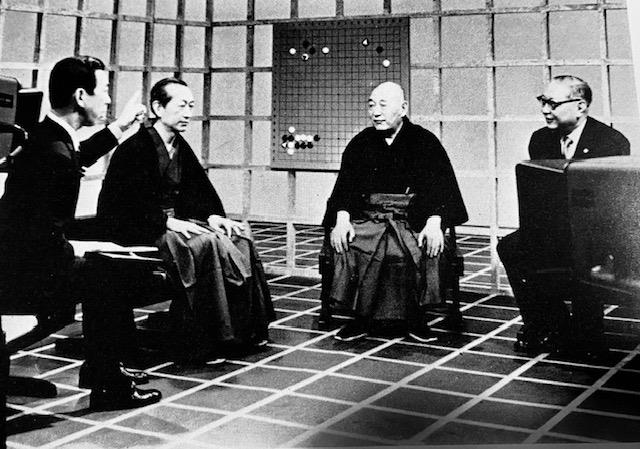
Picture: Go and Kitani reminiscing on TV in 1972
In 1931 he married Miharu, who would become known as "Mum" to a generation of go players, as well as the actual mother of Kitani Reiko, top female player and wife of Kobayashi Kōichi and grandmother of Kobayashi Izumi.
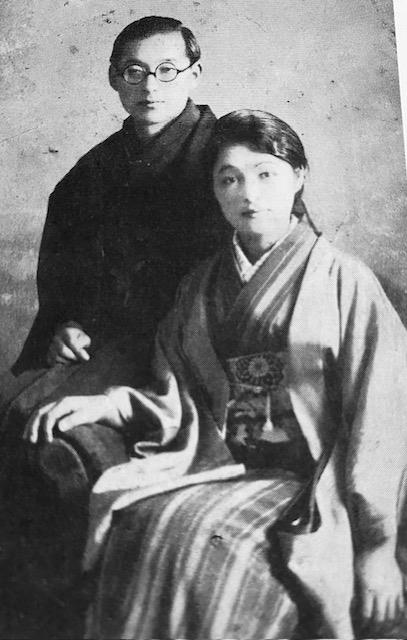
Picture: Newlyweds
Of course, his most famous claim to fame as a player was challenging Hon'inbō Shūsai in the latter's famous retirement game. As immortalized in Kawabata's famous Master of Go, the match became a metaphor between the old and the new, with the new prevailing.
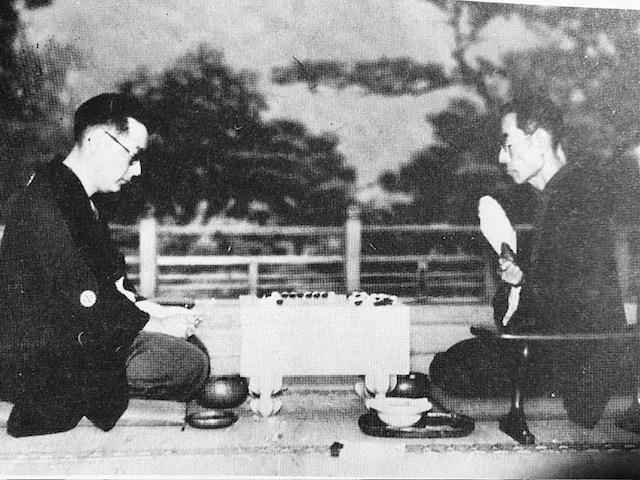
Picture: The Retirement Game
Ironically, he, like his friend Go Seigen, would never win the Hon'inbō title himself. He would continue to have success as a player, becoming the first, with his friend Go, Ōteai 8d in 1942. He was drafted into military service during the war, and he suffered from various ailments, including a stroke in 1954. He did manage to challenge for the Hon'inbō title twice, and won four other titles.
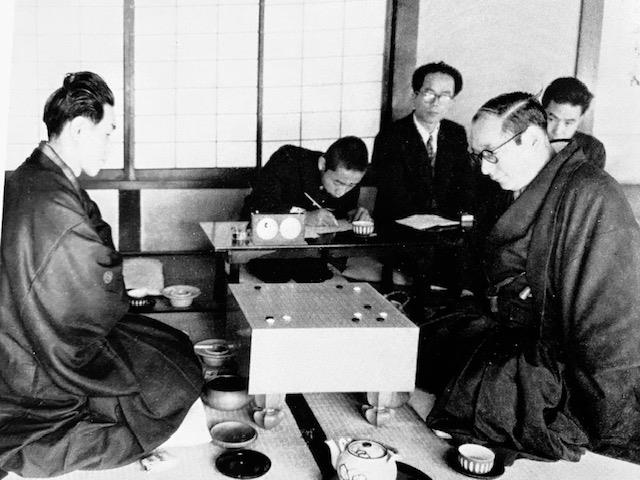
Picture: Kitani in action against Sakata Eio
Although his skill as a player and importance in advancing go theory cannot be overstated, somehow his greatest contribution was still ahead of him. Despite having several children of his own, he and his wife accepted a growing number of uchideshi (live-in disciples).
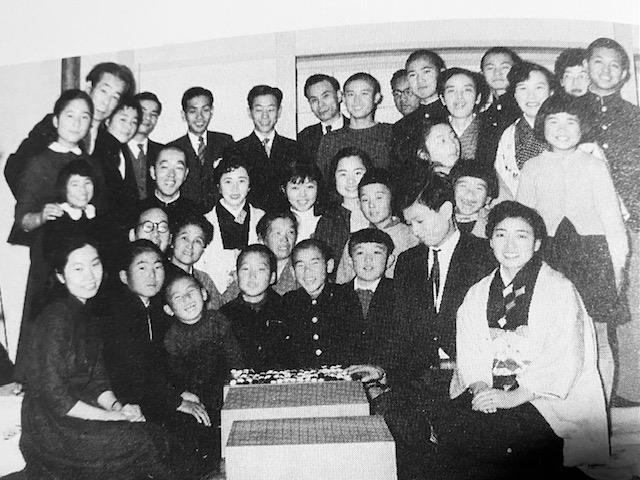
Picture: Portrait of the "kids" on New Year's Day, 1957
Ultimately, most of the top players of the the latter part of the 20th century and into the 21st, were Kitani's pupils. Eventually, his students would reach 500 dan. Notables include Ishida Yoshio, Katō Masao, Kobayashi Kōichi, Ōtake Hideo and Takemiya Masaki.
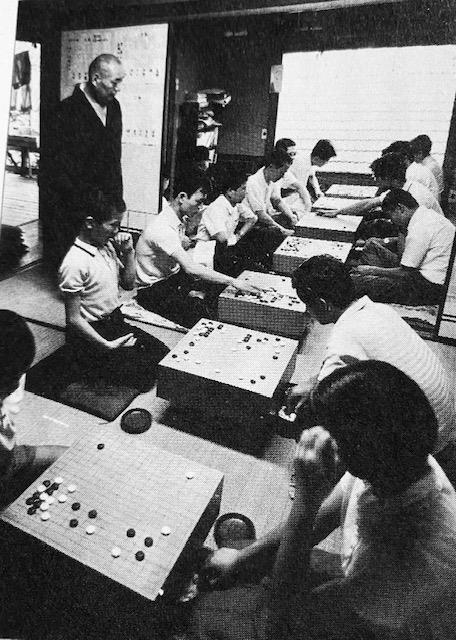
Picture: Kitani school under his watchful eyes
His final disciple would be his most successful. Chō Chikun came from Korea and would eventually pass Sakata as Japan's all time title holder with well over 80 titles.
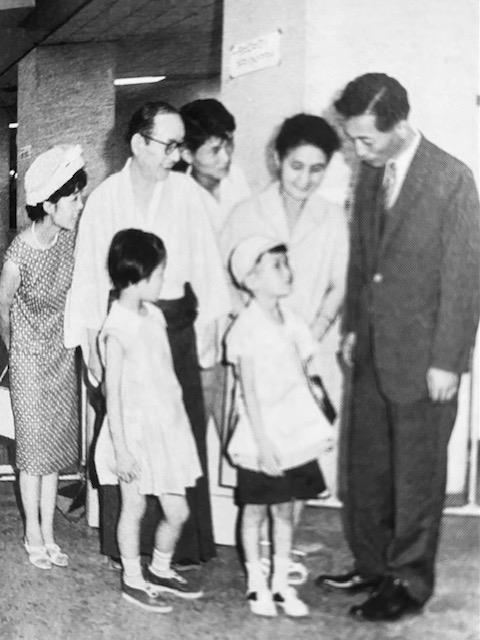
Picture: Chō Chikun arrives in Japan
We can thank Kitani for most of what was great about the heyday of Japanese tournament go. His influence is still with us, despite the rise of Korea, China and AI. Thank you for wading through my clumsy tribute and I hope I can share the achievements of his students with you in the years to come.
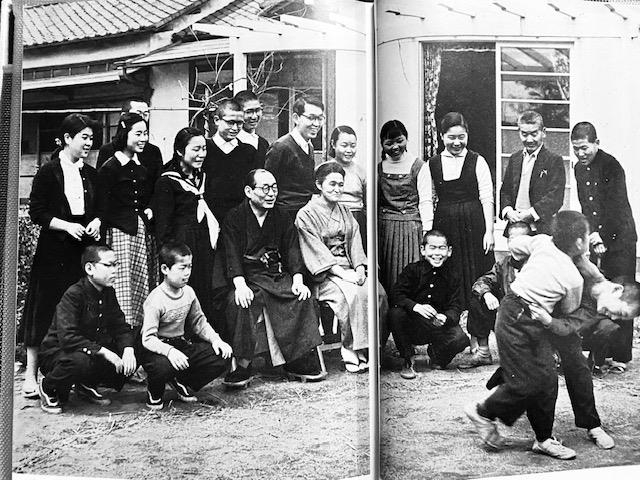
the endless struggle
echoes across the decades
throwing us with joy
- hka
Game records courtesy of Smart Go One. Photos from Go Review, The Kitani Dojo and Seventy Children by Kitani Miharu, and Kitani Minoru Complete Works, Games of Modern Masters, Vol 3.